Initial Situation: Corrosion as an Underestimated Cost Factor
Corrosion is a recurring and costly challenge for bus fleet operators across Europe. Particularly affected are exposed components such as wheel arches, underbodies, flanges, mixed material interfaces, retrofitted drill holes for additional fixtures, and other connection points. Even relatively new vehicles often reveal that factory-applied protection systems are insufficient.
The situation is further aggravated by daily operating conditions and environmental influences: road salt, moisture, stone chipping, and dirt particles continuously attack surfaces. Once the protective layer is damaged, corrosion can spread rapidly beneath the coating—often unnoticed until structural damage becomes visible.
This results in significant consequences for fleet operators:
- Reduced vehicle service life
- Increased maintenance and repair costs
- Downtime and operational disruptions
- Loss of vehicle value
- Risks related to safety and inspection requirements
Objective: Sustainable Solutions for Existing and New Vehicles
The focus of this application was to develop a sustainable solution for both in-service buses and preventive measures for new vehicles. The objective was not only to address existing corrosion issues but also to provide:
- Suitable aftermarket treatment strategies
- Clear product and application recommendations
- Defined processes for preparation and application
System Approach: 2K Corrosion Protection Instead of Reactive Measures
The presented approach is based on a preventive 2K corrosion protection system. The goal is to protect highly exposed areas at an early stage rather than reacting to advanced damage.
The system combines:
- Active corrosion inhibition
- Penetration into hard-to-reach areas
- Long-term resistance against chemical and mechanical stress
This strategy significantly extends vehicle service life and reduces total cost of ownership.
Process Step 1: Thorough Surface Preparation
Proper preparation is critical for the overall system performance. Typical measures include:
- Removal of wheel arch liners and covers
- High-pressure cleaning to remove salt, dirt, and deposits
- Dry ice blasting is recommended to eliminate all residual contamination
This ensures optimal adhesion of subsequent coatings.
Process Step 2: Active Corrosion Protection with Tectyl 558 AMC
The first layer is an active corrosion protection coating (approx. 50 µm dry film thickness).
Functions of this layer:
- Penetration into gaps and overlapping metal sections
- Active corrosion inhibition on bare or slightly oxidized surfaces
- Prevention of moisture and salt spray ingress into flanges and crevices
This primer forms the chemical foundation of the entire protection system.
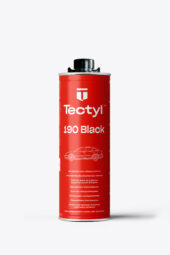
Process Step 3: Mechanical Protection with Tectyl 120 (Underbody) and Tectyl 5765 WA or 190 Black (Wheel Arches)
After a short flash-off time, a second, high-build protective layer is applied:
- Underbody: Tectyl 120 with approx. 300–400 µm dry film thickness
- Wheel arches: Tectyl 5765 WA or 190 Black, depending on requirements
Excessive film thickness should be avoided, as it may lead to insufficient drying and potential sagging, particularly with Tectyl 120.
This coating provides:
- High resistance to stone chipping and abrasion
- Long-term protection against water and chemicals
- Flexible performance under thermal and mechanical stress
Application: Process Reliability Through Professional Systems
To ensure consistent quality, the use of professional airless application equipment is recommended:
High-pressure pumps with suitable probes
Adjustment of parameters to vehicle geometry and target areas
This enables reproducible results across entire fleets.
Maintenance Strategy: Ensuring Long-Term Protection
To maintain protection performance over the full lifecycle, the following measures are recommended:
- Visual inspections every two years
- Local touch-ups in case of damage
- Integration of corrosion checks into maintenance schedules
Result: Clear Economic Benefits
Implementing the described system provides tangible advantages for fleet operators:
- Reduced corrosion-related repairs
- Extended vehicle service life
- Reduced multi-day downtime due to workshop stays
- Lower long-term maintenance costs
- Improved reliability and appearance
- Higher residual vehicle value
Corrosion protection thus evolves from a reactive maintenance task into a strategic component of asset management.
Corrosion Protection with Tectyl Means Value Preservation